Designer vs. Decorator: What's the Difference and Why It Changes Everything About Your Home
A Guide for DFW Homeowners Who Are Ready to Stop Guessing and Start Investing Wisely
Estimated Read Time: 7-9 minutes
Most homeowners don't know the difference between a decorator and a designer until they've hired the wrong one.
Every week, I speak with clients in DFW who are frustrated. Their home was recently done by someone they hired to help. The pillows are beautiful. The throw blanket is perfectly placed. But the sofa is too small for the room, the lighting plan was never touched, and when they wanted to talk about why the traffic flow into the kitchen feels wrong, the person they hired said that was not really their area.
That is not a design failure. That is a scope failure. The homeowner hired a decorator when they needed a designer. And the result is a home that looks styled but does not live well.
October is when DFW homeowners start thinking seriously about upgrading their interiors before the holiday season. Before you make any call or book any consultation, understanding this distinction is the most important thing you can do. This guide explains the difference clearly, honestly, and with the specificity that most people in this industry are afraid to put in writing.
The Myths about Interior Decorators and Designers That Cost Homeowners the Most
The confusion between these two professions is not accidental. The terms are used interchangeably in magazines, on social media, and even by people in the industry. Here is what is actually true.
⚠️Myth 1: Decorator and Designer Are Just Different Words for the Same Thing
They are not. An interior designer is trained and typically licensed to manage both the aesthetic and the functional, structural, and spatial aspects of an interior environment. In Texas, the title interior designer carries specific educational and examination requirements. A decorator focuses on the surface layer: furniture, fabrics, accessories, colour, and styling. Both have enormous value. But they are not interchangeable, and the scope of work they can take on is fundamentally different. Hiring a decorator for a project that requires a designer is like hiring a personal trainer when you need a physical therapist. The intentions are good. The scope is wrong.
⚠️Myth 2: I Just Need Help with Furnishings, I Don't Need a Full Designer
This is the most common framing we hear from homeowners who are ready to update their home but feel that a full-service designer is more than they need. Here is the honest answer: if you are updating furnishings in more than two rooms, or if the furniture you are replacing costs more than $15,000, the investment in professional guidance almost always pays for itself.
⚠️Myth 3: A Designer Will Make It Look Like Their Style, Not Mine
The most common fear homeowners express before their first consultation with a full-service designer is that the result will feel like the designer's home, not theirs. Twenty years and hundreds of completed projects have shown me the opposite is true. A skilled designer's job is to edit and amplify your preferences, not to impose a signature style. The rooms that feel most deeply personal are almost always the ones that were designed with the most professional discipline. Decorators who work from a signature style often produce rooms that look beautiful in photographs and feel generic to live in. Designers who listen first produce homes that are unmistakably yours.
⚠️Myth 4: Updating Furnishings Is a Small Project That Doesn't Need Much Planning
A furnishing update in a luxury DFW home is not a shopping trip. It is a coordinated project that involves lead times of 8 to 24 weeks for custom and semi-custom pieces, spatial planning to ensure scale and proportion work across every room being updated, finish coordination so new purchases relate correctly to existing architecture and fixed finishes, and delivery and installation logistics that must be sequenced to avoid damage, storage fees, and chaos. Without professional project management, what feels like a simple update becomes an eight-month experiment in frustration. With it, it becomes a reveal moment that transforms how you feel about your home every single day.
How to Update Your Home Furnishings the Right Way: The SKI Process
Whether you are refreshing a single living room or updating furnishings across your entire home, the process that produces the best results every time follows the same disciplined sequence.
Step 1 - Define the Scope and Investment Before You Look at a Single Piece:
The most expensive mistake in any furnishing update is beginning with shopping. Before you visit a single showroom or open a single website, you need to answer three questions:
- Which rooms are being updated?
- What is the total investment you are willing to make?
- And what is the single outcome you want most?
Your answers to these questions determine everything that follows, the furniture lines we pull from, the lead times we need to allow for, and whether the scope of your project benefits from our full-service design process or our furnishings-focused consultation service.
Step 2 - Conduct a Room-by-Room Spatial Analysis:
Scale is the element most homeowners get wrong when they furnish independently. A sofa that looks right in a showroom is frequently wrong for the room it goes into, either too small and floating in space or too large and blocking natural traffic paths.
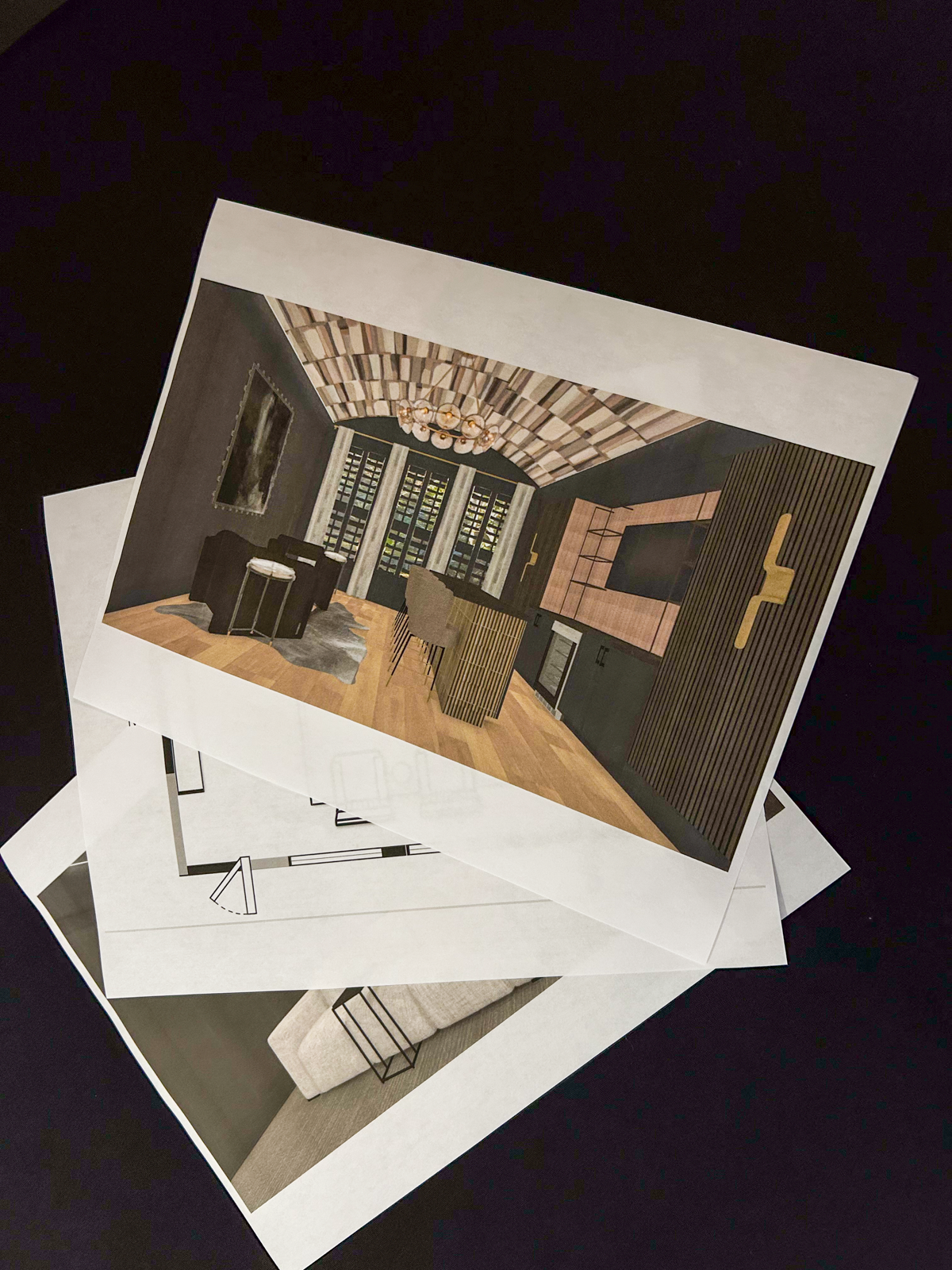
Before any selection is made, every room being updated receives a scaled floor plan that identifies the correct furniture footprint, the traffic clearances, the placement of the Visual Anchor, and the rug size that grounds the entire composition. This step alone prevents the single most common and most expensive mistake in residential furnishings.
Step 3 - Access Trade-Only Lines Through Stephanie Kratz Interiors:
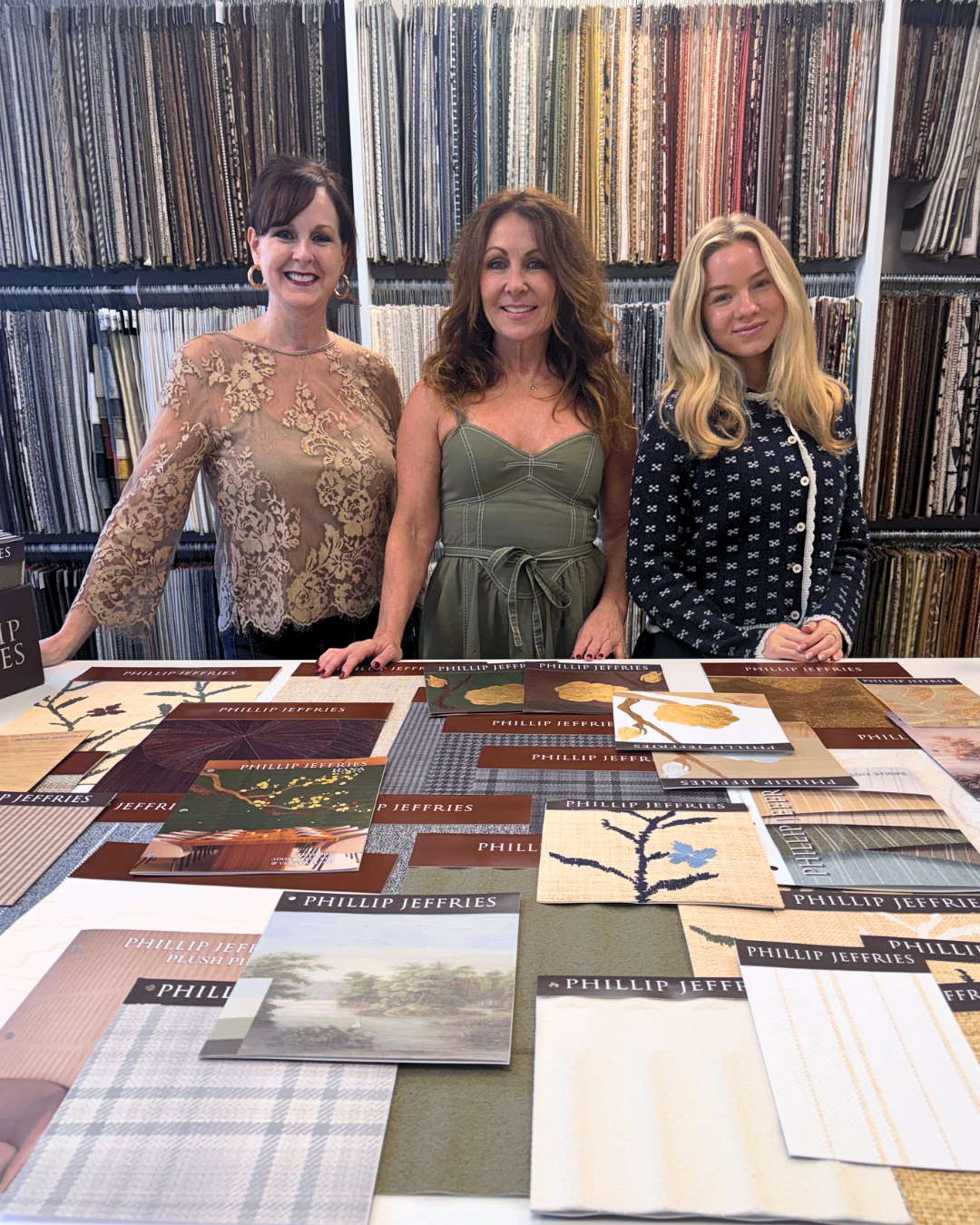
Stephanie Kratz Interiors has access to over 400 furniture and finish lines, many of which cannot be purchased directly by the public. These lines include some of the finest upholstery, case goods, lighting, and textile manufacturers in the world.
When you work with Stephanie Kratz Interiors on a furnishings update, you are not choosing from what is available at a local furniture store. You are choosing from a curated universe of the finest residential furniture being produced globally, selected specifically for your home and your lifestyle.
Step 4 - Coordinate Lead Times and Manage the Delivery Sequence:
Custom and semi-custom furniture has real lead times that must be factored into any honest project plan. Standard production upholstery runs 8 to 12 weeks. Fully custom upholstery and case goods can run 16 to 24 weeks. Custom lighting with specialty finishes runs 8 to 20 weeks. Custom window treatments run 6 to 12 weeks.
Stephanie Kratz Interiors manages every lead time, every delivery window, and every installation appointment. You do not coordinate a single delivery or make a single call to a freight company. That is our responsibility from procurement to placement.
Step 5 - The Install and Styling Reveal:
A furnishings update through Stephanie Kratz Interiors does not end with delivery. It ends with the reveal. Every piece is placed according to the scaled floor plan, every accessory is styled, every lamp is lit, and every surface is composed. You return to a home that is already complete.
This is the difference between purchasing furniture and having your home designed. One ends at the delivery door. The other ends when the room is exactly what it should have always been.
Interior Designer vs. Interior Decorator vs. DIY: a Straight Comparison
Here is the honest breakdown of what each approach delivers, where it excels, and where it falls short. No hedging.
| Interior Designer (SKI) | Interior Decorator | DIY / Retail | |
|---|---|---|---|
| Space planning | Full scaled floor plan | Furniture placement advice | Trial and error |
| Lighting design | Full plan: ambient / task / accent | Lamp and fixture selection only | Overhead fixture only |
| Trade access | 400+ lines, Custom Craftsman | Limited trade access | Retail only |
| Project management | Full: orders, delivery, install | Partial: varies by provider | Self-managed |
| Structural input | Yes: layout, openings, finishes | No: surface layer only | No |
| Furnishing update scope | Any scale, coordinated reveal | Best for 1-2 rooms, surface layer | Best for accent pieces only |
| Timeline | Managed to your project, Material Furnishing Selections | Depends on provider | Unpredictable |
The Furnishing Update Rules every DFW Homeowner needs to Follow This Season
These apply whether you are updating one room or five, and whether you are working with a designer or navigating it on your own.
| ✅ DO Establish a total investment number for the entire update before you begin selecting. Know whether you are working with $30,000, $80,000, or $200,000. Every selection decision flows from that number. | 🚫 DON'T Start selecting furniture before you have a budget. Without a number, you will either over-invest in the first room and have nothing left for the rest, or under-invest everywhere and achieve nothing. |
| ✅ DO Work from a scaled floor plan for every room. The plan determines rug size, furniture footprint, clearances, and lighting positions before a single item is purchased. | 🚫 DON'T Use 'it looks about right' as a sizing method. Scale errors are the most common and most expensive mistake in residential furnishings. They cannot be corrected after delivery. |
| ✅ DO Order your anchor pieces, sofa, dining table, primary bedroom upholstery, first, with full awareness of their lead times. Everything else coordinates around them. | 🚫 DON'T Shop for accent pieces and accessories before your anchor pieces are confirmed. You will either fall in love with things that don't work with your main selections, or hold delivery dates you cannot meet. |
| ✅ DO Request fabric and finish samples in your actual space before committing to upholstery. Samples look different under your lighting, against your existing flooring, and next to your fixed finishes than they do in a showroom. | 🚫 DON'T Select upholstery fabric from a small memo sample in a showroom under commercial lighting. The colour, texture, and tone will read differently at home. Always sample in the space. |
| ✅ DO Coordinate your window treatment selections with your upholstery before either is ordered. Drapery fabric and furniture fabric must relate to each other. | 🚫 DON'T Order window treatments and upholstery independently from separate providers without coordinating them. The most common result is a room where every individual element is beautiful and nothing works together. |
| ✅ DO Tell your designer your honest deadline. If you want to be finished before Thanksgiving, say so in the first conversation. Lead times must be built backwards from your target date. | 🚫 DON'T Assume everything will arrive on time. Custom furniture lead times are estimates, not guarantees. Buffer time and contingency planning are part of every professional furnishings project. |
The R.O.O.M. Framework: How to evaluate any Furnishing Decision
After 20 years of completing furnishing projects from single-room refreshes to full home transformations, every decision I make for a client passes through the same four-question test. I call it the R.O.O.M. Framework.
R - Relationship (Does This Piece Relate to Everything Else?)
No piece of furniture exists in isolation. Every selection must be evaluated against the pieces it will live beside, across from, and underneath. The relationship between a sofa and the rug beneath it, the coffee table in front of it, and the drapery flanking the window behind it is what makes a room feel composed versus collected. Before committing to any piece, ask: does this relate correctly to the scale, tone, and material of everything it will live with?
O - Orientation (Is This Piece in the Right Position for How the Room Lives?)
Furniture placement determines traffic flow, conversation zones, and how a room functions at every time of day. The most beautiful sofa in the wrong orientation creates a room that frustrates every time someone tries to move through it. Orientation is not a styling decision. It is a spatial decision that must be made on a floor plan before anything is purchased.
O - Occasion (Does This Piece Work for How You Actually Use This Room?)
A primary living room in a home with young children needs different upholstery than one used exclusively for adult entertaining. Every furnishing selection must be evaluated against the actual occasion, not the aspirational one. The room should work perfectly for the life you live in it today.
M - Meaning (Does This Piece Add to the Personal Narrative of Your Home?)
The most elevated homes are the ones that feel deeply personal. Not decorated. Inhabited. Every piece that earns a place in a room designed by Stephanie Kratz Interiors has passed the meaning test: it either adds to the Visual Thread of the home, expresses something true about the person who lives there, or serves such a precise functional role that its presence is obviously intentional.
Things to Do Right now if You Want Your Home Ready for the Holidays
Every one of these is actionable this week. Each is also a standalone Short, Reel, or newsletter tip.
7 Quick Tips
1. Connect with Stephanie Kratz Interiors this week to discuss your furnishings updates and elevate your home. Call 469-489-5459 or book at chatluxury.stephaniekratzinteriors.co.
2. Pull every piece of furniture in your target room away from the wall by at least 6 to 12 inches. Just this one move will immediately reveal whether your room is correctly scaled.
3. Photograph your existing room from the doorway at eye level. This is the angle your eye actually sees when you enter the room. Look for what is missing: a defined anchor, a rug that grounds the seating, layered lighting, or a Retreat Zone.
4. List every piece of furniture you are keeping. This list is the starting point for your designer consultation. Everything new must relate correctly to everything staying.
5. Measure your sofa with tape on the floor before you replace it. Lay out the footprint of the new piece you are considering. Most homeowners discover either that the current sofa is too small or that the new one they love will not clear the coffee table.
6. Replace every overhead bulb in the room you are updating with a 2,700K warm white LED on a dimmer before any new furniture arrives. New furniture in flat, cool light loses up to half its visual impact.
7. Give yourself a 15-minute honest audit: walk through every room you are thinking of updating and write down the one thing that bothers you most about each. That list is the brief for your first conversation with a designer.
Your Home Should Reflect Who You Are Right now
Not who you were when you bought the furniture ten years ago. Not the style that was trending when you moved in. Your home today should be the most beautiful, most functional, most personal version of the space you live in every single day.
Whether you are updating furnishings in two rooms or five, whether you want a refresh or a full design service from floor plan to reveal, the conversation starts the same way: a 15-minute call with Stephanie to talk about your home, your goals, and the timeline that works for your life.
Share This Post