Curated Curation
Estimated Read Time: 3-4 minutes
Key Takeaways:
- Think of art not just as wall covering, but as a crucial architectural and emotional layer of the room.
- Avoid the mistake of too small art. One massive, impactful piece often grounds a room better than scattered small frames.
- Look for 3D art textiles, plaster, or carved wood—to add depth that catches the light and adds sensory interest.
Investing in Art for Your Legacy
We believe that art is the single element that most profoundly tells your personal story in a home. While you can always swap out throw pillows or a rug, the art you choose to hang on your walls is a window into your soul. Too often, we see people choosing art solely to "match" a color palette. We urge our clients to see art as an emotional and architectural investment. Art isn’t decoration; it is the "High Touch" definition of your style that gives a room its true narrative and purpose.
3 Pillars of Art as an Architectural Investment
The Power of Large Scale
Scale is the most powerful tool for Expanding the Architectural Horizon. We frequently suggest to clients that they consider moving beyond the "gallery wall" of smaller works and instead consider investing in a single, commanding statement piece. A large scale work of art does not simply fill a space; it creates Architectural Depth and becomes the definitive Visual Anchor for the entire space. By selecting a work of art of similar scale to the space, you create a sense of Design Permanence, and it becomes a bold, simple choice with maximum impact.
Adding Sensory Dimension
Art in 2026 is moving beyond the flat canvas and into the world of the Tactile Revolution. Adding Sensory Dimension is looking at art pieces that have a physicality and a texture, like sculpted plaster, woven fibers, or even wood. The high touch surfaces play off the lighting in your home as the sun moves through the day, creating a "Living Sanctuary" effect. This is Sensory Engineering that makes your art not just something you look at, but something you experience. It adds a new level of "Organic Modernism" that blunts the edges of a room and makes you emotionally connect with your art.
Off Center Architectural Balance
True luxury can be found in the unexpected. Though symmetry is the historical norm, we adore the opportunity to apply off center architectural balance to provide a more modern and sophisticated circulation pattern. Placing a large piece of art slightly off center, perhaps paired with a sculptural floor lamp or a low custom bench, provides a "Dynamic Narrative" that leads the eye throughout the space. This application of off center balance disrupts the "Expected Grid" of a space and provides a more curated and "Boutique Luxury" aesthetic. It is a thoughtful design application that suggests a fashion forward sensibility, proving that the concept of balance is really about "Spatial Integrity."
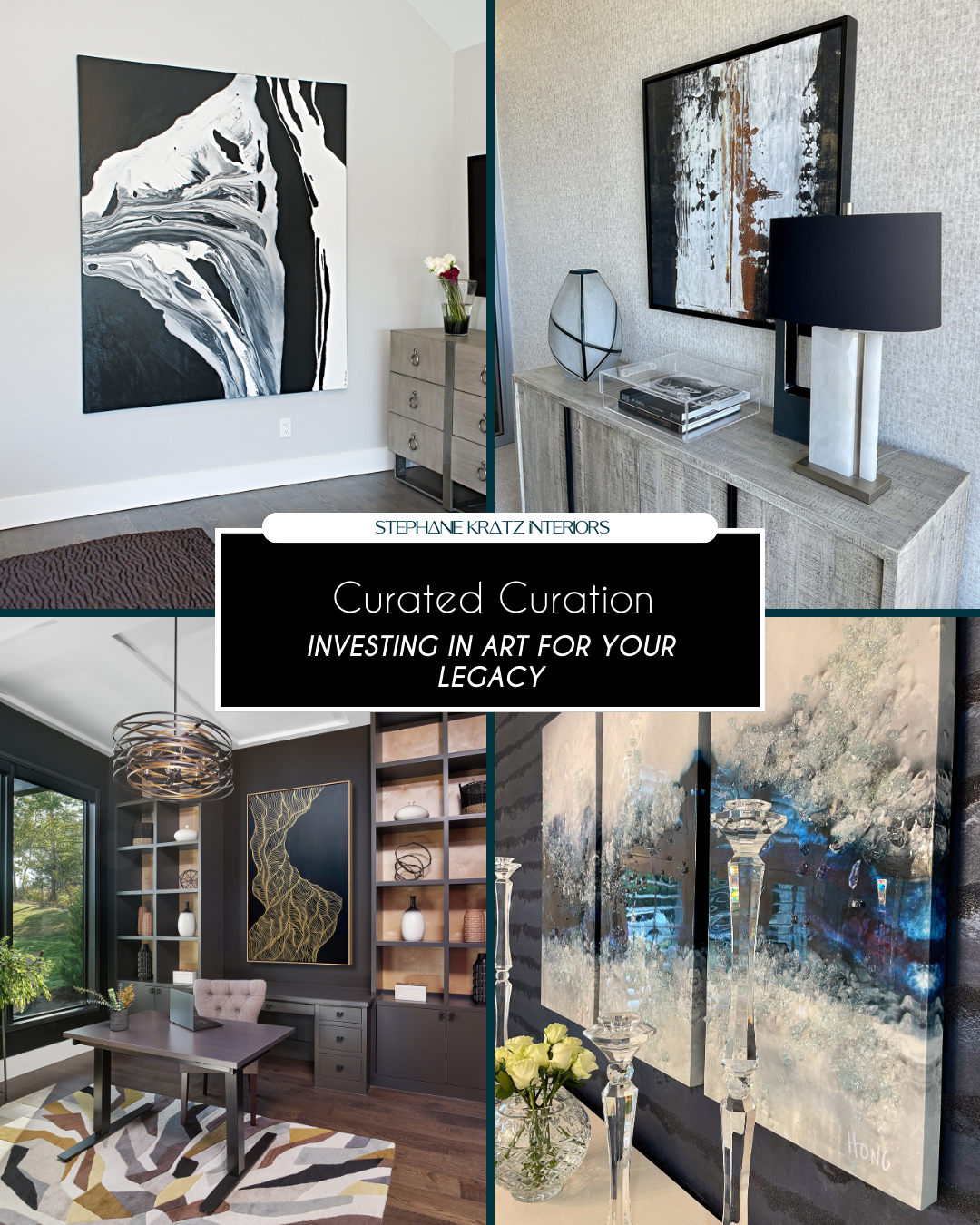
Investing in art is about more than just aesthetics; it is about "Sensory Engineering." In 2026, we are seeing a massive shift toward tactile, three-dimensional art. Think about woven textiles, sculpted plaster, or carved wood that brings a layer of depth you can actually feel. This type of art catches the light differently throughout the day, creating a living, breathing sanctuary that feels both curated and comfortable. It’s not about finding a piece that fits; it's about finding the piece that anchors your entire design statement and lasts far beyond any passing trend.
Ready to begin your journey of curated art investment?
Contact Stephanie Kratz Interiors today for a free consultation!
Share This Post