Curated Framing
Estimated Read Time: 3-4 minutes
Key Takeaways:
- Think of your windows as the extension of your walls. The right drapery can make a low ceiling feel tall and a cramped room feel expansive.
- Use heavy velvets to "cozy up" a large, cold room or light linens to add movement and breeziness to a smaller space.
- Treat your windows as the frame for your "personal narrative." Curtains are not decoration; they are the architectural definition of your style.
The Underrated Power of Curtains
We often spend so much time thinking about the main pieces in a room, the sofa, the art, the rug. But we often overlook the frame that holds it all together. To us, curtains are not just a decorative finish; they are the essential "architectural jewelry" that tells you what the room is supposed to feel like. At Stephanie Kratz Interiors, we view drapery as a structural tool to define space and soften the hard lines of your windows. A room without well styled curtains feels unfinished because it’s missing that final layer of intention and "High Touch" comfort that turns a house into a true sanctuary.
3 Pillars of Architectural Window Design
Expanding the Architectural Horizon
We see curtains as something far more than merely a window treatment, but rather as a spatial tool used to influence the way you see your space. We don’t merely ‘hang’ our curtains, we incorporate them. In doing so, we are Expanding the Architectural Horizon, moving the boundary of the ‘Fifth Wall.’ It’s a design approach that makes any ceiling seem higher, any space seem more expansive. We are going well beyond the functionality of privacy or light control, instead using the space created by the horizontal and vertical lines of the drapes to provide the essential ‘Visual Anchor.’ That’s the idea behind Design Permanence: making a choice that fundamentally alters the way the space exists, rather than merely the way it appears.
Defining the Sensory Mood
When we design the 'Feel' of a sanctuary, we consider the windows. In high performance design, you don't have to choose one or the other; you get to design the ambiance. We enjoy designing with Sheer Layers behind another, more defined window treatment to give our clients absolute control over their space. This, my friends, is Atmospheric Engineering. You can filter the natural light in the morning to create a soft, inviting, and minimally stimulating glow. In the evening, you can close the heavy curtains to create a cozy, 'Lounge' ambiance, reminding you it's time to disconnect. The way light behaves with your curtains will set the Defining Sensory Mood of your space every waking hour.
Adding Tactile Integrity
A truly finished space has a physical, tactile feel. If a space feels "cold," "sterile," or "empty," it’s probably because it’s missing the soft architectural finish that well-layered curtains bring. In 2026, we are in the midst of a Tactile Revolution, and curtains are the ultimate tool. It’s not just about "softening the hard lines" of the window. It’s about adding Tactile Integrity to the entire space. The weight of the fabric, the texture of the Belgian linen or the opulence of the velvet, adds an organic contrast to the unyielding hardness of the architecture. It adds the final, high touch finish to the space, making the house less a structure and more a true "Social Sanctuary."
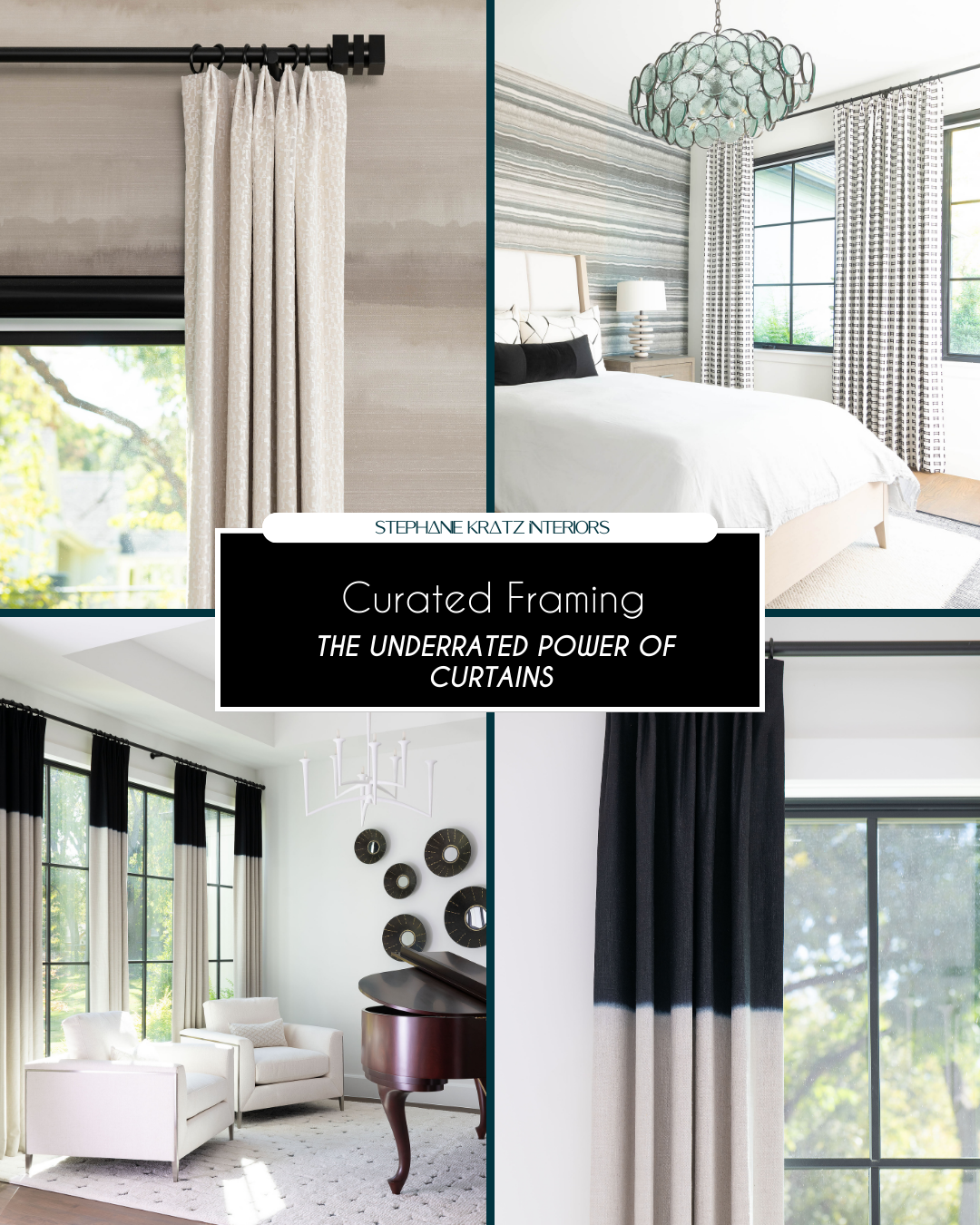
Designing your windows is about creating a deliberate, "Sensory Sanctuary." We love to use sheer layers behind structured drapes to give our clients control over the mood. In the morning, you want to filter natural light to create a soft, inviting glow. In the evening, pulling heavy drapes closed creates an intimate, "lounge" vibe that signals it's time to disconnect. This isn't about hiding your windows; it's about engineering how your space feels at every hour of the day.
Ready to use the power of curtains to complete your design statement?
Contact Stephanie Kratz Interiors today for a free consultation!
Share This Post